

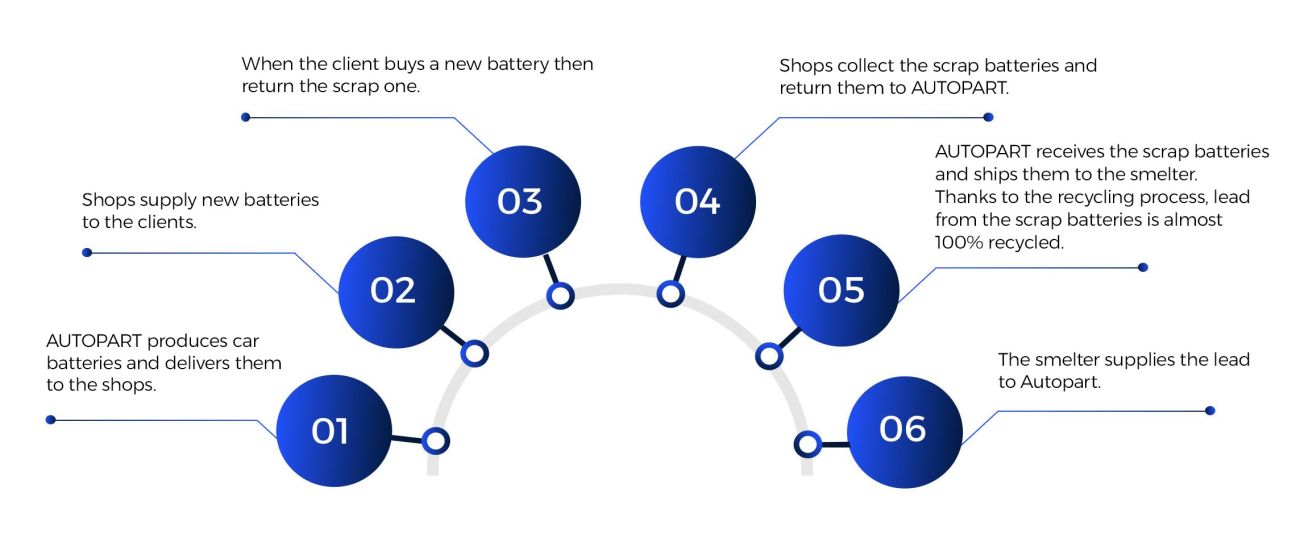
Recycling is becoming one of the most important ways to achieve the Circular Economy. Lead-acid battery recycling is an ideal example to emulate and explore our own waste management solutions.
From a used battery, we can separate three main components and raw materials, which are then recycled. The first group consists of polypropylene components: housings, lids, and their components, such as caps, ramps, and flaps. The used materials are used to produce polypropylene chips, which are then used to produce regranulate, which is then used to make new housings and lids. The second material reused in the battery production process is the basic raw material, lead. At the smelter, the lead components are melted down and formed into approximately 40 kg lead ingots. The finished ingots are melted or ground to obtain a powder, i.e., lead oxide—the main component of battery paste. They are also used to make bridges, posts, and other lead parts found in batteries. Electrolyte can also be recovered from used batteries. Recycling produces sodium sulfate crystals, which are then used in the production of fertilizers, detergents, and cleaning products.